Fire-Resilient Design as a Baseline, Not an Upgrade
By Joy Line Homes
In much of California, fire risk is no longer an edge case or a rare event. It is a defining condition of the built environment. From the Santa Cruz Mountains and Santa Rosa County to the foothills outside Sacramento and the wildland edges of Los Angeles, Orange County, and San Diego, wildfire exposure has become part of everyday planning reality. Yet many homes are still designed as if fire resilience is an optional upgrade rather than a baseline expectation.
This mindset creates long-term problems. Homes that rely on add-ons and last-minute hardening measures tend to be more expensive to insure, harder to maintain, and more vulnerable during extreme events. Fire-resilient design works best when it is integrated from the beginning. When materials, assemblies, site planning, and detailing are aligned early, resilience becomes part of the home’s performance rather than a checklist item.
Treating fire resilience as a baseline does not mean building bunkers or sacrificing design quality. It means understanding how fire behaves, how homes fail, and how smart design choices can reduce risk without compromising comfort. When done well, fire-resilient homes are often quieter, more durable, and lower maintenance than conventional construction.
Why Fire Resilience Cannot Be an Afterthought
Wildfires damage homes in predictable ways. Embers enter through vents and gaps. Flames exploit weak exterior materials. Heat breaks windows and allows fire to spread inside. When fire resilience is treated as an upgrade, these vulnerabilities remain baked into the structure. Homeowners then attempt to fix problems piecemeal, often at higher cost and with mixed results.
A baseline approach reverses this pattern. It starts by assuming exposure and designing accordingly. Roof assemblies, wall systems, eaves, vents, and exterior finishes are selected for resistance rather than appearance alone. Openings are detailed to reduce ember intrusion. The result is not a fireproof home, but a home that performs better under stress and gives occupants more time and options.
This shift matters because climate conditions are changing faster than building habits. Fire seasons are longer. Weather is more extreme. Insurance markets are responding by tightening coverage and raising premiums. Homes that demonstrate resilience from the ground up are better positioned for long-term ownership and insurability.
Understanding Fire Behavior at the Home Scale
Fire does not need a wall of flames to destroy a house. In many cases, embers carried by wind are the primary cause of ignition. These embers can travel miles ahead of a fire front and settle in vulnerable areas like roof valleys, vents, decks, and landscaping. Once ignition occurs, radiant heat and direct flame spread accelerate damage.
Fire-resilient design focuses on these mechanisms. Reducing ember entry, limiting combustible surfaces, and managing heat exposure are all part of the strategy. This is why resilience is not just about one material choice. It is about the interaction between components.
For example, a fire-rated roof is far more effective when paired with enclosed eaves and ember-resistant vents. Noncombustible siding performs best when windows are upgraded and gaps are minimized. Treating these elements as a system rather than isolated features is what turns resilience into a baseline.
The Role of Defensible Space
Design does not stop at the walls of the house. Site planning and landscape decisions influence fire behavior just as much as construction details. Defensible space reduces the intensity of fire near the structure and limits opportunities for ignition.
Baseline fire resilience accounts for this from day one. Hardscape placement, plant selection, and separation between structures are coordinated with the building design. When landscaping and architecture work together, the home becomes easier to defend and maintain over time.
Materials That Support Long-Term Fire Performance
Material choice is one of the most visible aspects of fire-resilient design, but it is often misunderstood. The goal is not simply to choose the most resistant product available. The goal is to create a durable assembly that performs consistently over decades.
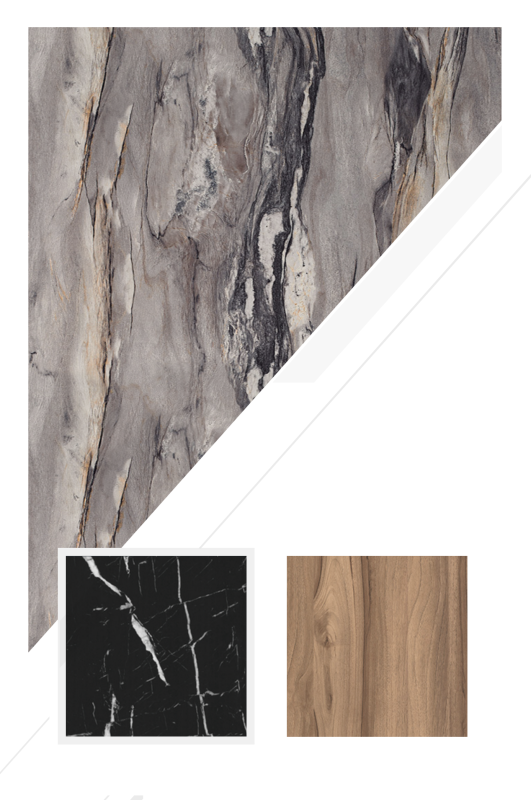
Noncombustible or ignition-resistant exterior materials reduce vulnerability to flame contact and radiant heat. Fiber cement siding, metal roofing, and well-detailed stucco systems are common examples. These materials also tend to perform well in other areas, including moisture resistance and longevity.
Windows are another critical element. Tempered glass and well-sealed frames reduce the chance of breakage under heat exposure. When windows fail, interior materials become exposed and fire spread accelerates. Treating window performance as part of the baseline improves both safety and comfort.
Details That Quietly Make a Big Difference
Many of the most important fire-resilient features are not obvious at first glance. Enclosed eaves, tight construction tolerances, and well-sealed penetrations do not draw attention, but they dramatically improve performance.
Vents are a common failure point. Ember-resistant vent designs allow airflow while blocking ember entry. When these are integrated early, they become a seamless part of the building envelope rather than an awkward retrofit.
Decks and exterior stairs also deserve attention. When built with combustible materials and attached directly to the home, they can act as a fuse. Designing these elements with separation, noncombustible surfaces, or protective detailing reduces risk and improves durability.
Why Fire-Resilient Homes Age Better
Homes designed for fire resilience often outperform conventional homes in everyday conditions. Tighter construction reduces drafts. Durable materials require less frequent replacement. Well-detailed assemblies manage moisture more effectively. These benefits accumulate over time.
This is why resilience should not be framed as a cost burden. When fire performance is built into the baseline, the home often costs less to maintain and repair. Over decades of ownership, these savings can outweigh initial investments.
There is also a psychological benefit. Homeowners who know their home was designed with risk in mind tend to feel more confident during extreme weather. That confidence matters in regions where evacuation warnings and smoke events are becoming more common.
Insurance, Financing, and Long-Term Value
Insurance markets are increasingly sensitive to fire exposure. Homes that demonstrate resilience through design and documentation are better positioned to secure coverage and manage premiums. While no design guarantees insurability, a baseline approach provides a stronger starting point.
Lenders are also paying attention to long-term risk. A home that is expensive to insure or frequently damaged becomes a liability. Fire-resilient design supports value retention by reducing the likelihood of catastrophic loss and extended downtime.
As disclosure requirements evolve, homes with documented resilient features may become more attractive to buyers. What feels like a design choice today may become an expectation tomorrow.
Why Construction Method Matters
Fire-resilient design relies on precision. Gaps, misalignments, and rushed detailing undermine performance. This is where construction method plays a role.
Factory-built and modular construction can support resilience by reducing variability. Controlled environments allow for consistent assembly, better quality control, and earlier coordination of systems. Components arrive on site with fewer unknowns, which helps maintain the integrity of the design.
This does not mean resilience is exclusive to off-site construction. It means that processes which reduce variability make it easier to deliver reliable outcomes. When resilience is the baseline, predictability becomes an asset.
Designing for Fire Without Sacrificing Comfort
One common concern is that fire-resilient homes will feel harsh or industrial. In practice, the opposite is often true. Homes designed with durable materials, thoughtful openings, and controlled airflow tend to feel calm and comfortable.
Fire resilience encourages clarity in design. Rooflines are simpler. Details are cleaner. Assemblies are intentional. This restraint often aligns with modern design principles that value longevity and performance over excess.
When resilience is integrated early, it does not limit creativity. It provides a framework that supports thoughtful choices.
Conclusion
Fire-resilient design is no longer an upgrade for a few high-risk areas. It is a baseline expectation for responsible homebuilding in California. As wildfire exposure increases and insurance markets respond, homes that integrate resilience from the beginning will be better positioned to perform, adapt, and endure.
By understanding fire behavior, selecting durable materials, detailing assemblies carefully, and coordinating site planning, homeowners and builders can create homes that are safer without being extreme. When resilience is treated as a starting point rather than an add-on, it becomes part of the home’s long-term value and everyday comfort.
About Joy Line Homes
Joy Line Homes designs fire-resilient, factory-built and modular homes that prioritize long-term performance and livability.
Visit AduraAdu.com to explore resilient home planning resources.
Let's Get Started
Please Select the form that applies to you by selecting the appropriate tab above.
We are based in San Jose County ,
California
Tel: (831) 888-Home
Email: info@joylinehomes.com
Business Hours: 9am - 6pm