The Role of Architectural Restraint in High-End Modular Homes
By Joy Line Homes
In high-end residential design, the most compelling homes are often defined not by excess but by clarity. They feel composed rather than busy, intentional rather than improvised. This quality is frequently the result of architectural restraint. In the context of modular and factory-built homes, restraint plays an especially important role, shaping not only how a home looks but how it performs, ages, and supports daily life.
Architectural restraint is the practice of making disciplined design decisions that prioritize proportion, coherence, and performance over novelty. It does not mean stripping a home of character. Instead, it means choosing where complexity is meaningful and where simplicity serves the project better. In high-end modular homes, this approach aligns naturally with the precision and coordination inherent in the building process.
As modular construction continues to evolve beyond efficiency-driven housing into premium residential applications, restraint has emerged as a defining strategy. It allows modular homes to feel refined, custom, and enduring without relying on unnecessary visual noise.
Understanding Architectural Restraint
Architectural restraint begins with clarity of intent. Every home has constraints related to site, budget, climate, and use. Restraint acknowledges these realities and works within them thoughtfully rather than fighting against them.
In restrained design, the architecture is guided by a limited number of strong ideas. These ideas are carried consistently through the plan, the exterior form, and the interior spaces. When fewer concepts are competing for attention, the home feels more cohesive and easier to understand.
This clarity is often perceived as luxury. A restrained home does not need to explain itself through decoration. Its quality is evident in how well it functions and how calmly it supports daily living.
Restraint Versus Minimalism
Architectural restraint is often confused with minimalism, but the two are not the same. Minimalism is an aesthetic style. Restraint is a design discipline. A restrained home may still be warm, textured, and layered, but those layers are intentional and limited.
This distinction is important in high-end modular homes, where warmth and comfort are as important as clarity and precision.
Why Restraint Elevates Modular Design
Modular construction rewards clarity. Because components are designed, engineered, and assembled before arriving on site, decisions must be made early and carried through consistently. Architectural restraint supports this process by reducing unnecessary variation.
When a modular home relies on a clear structural grid, consistent wall assemblies, and repeatable details, coordination becomes easier. This improves build quality and reduces the risk of errors during fabrication and installation.
High-end modular homes that embrace restraint often feel more custom because the design intent is clear and well executed. Rather than appearing standardized, they feel resolved.
Form That Feels Confident
Restrained architecture often begins with simple forms. Clean volumes, balanced proportions, and straightforward rooflines create a strong foundation. These forms are not simplistic. They are carefully considered to respond to site conditions, climate, and program needs.
In modular homes, simpler forms also support better performance. They are easier to insulate, easier to seal, and easier to coordinate structurally. Over time, this contributes to durability and comfort.
A confident form does not rely on visual tricks. Its strength comes from proportion and relationship to the site.
Plans That Prioritize Living
Architectural restraint is particularly powerful in plan design. Restrained plans avoid unnecessary circulation and prioritize spaces that are used daily. Rooms are sized appropriately, and relationships between spaces are clear.
In high-end modular homes, this often results in plans that feel generous without excess. Living spaces are open but defined. Private spaces are protected without feeling isolated. Storage is integrated rather than added later.
This planning discipline supports both comfort and long-term adaptability.
Clarity Over Complexity in Layout
Complex layouts can feel impressive on paper but frustrating to live in. Restrained plans focus on ease of movement and intuitive use. This improves daily experience and reduces long-term wear on the home.
Material Palettes That Work Together
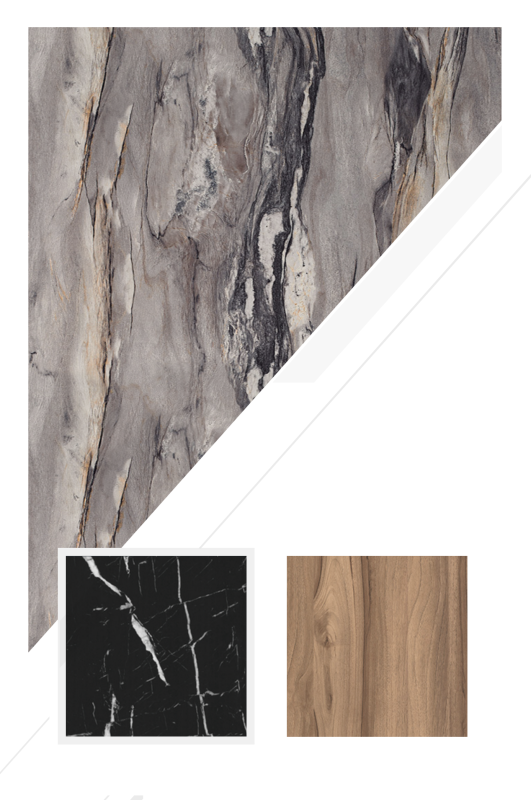
High-end modular homes often succeed or fail based on material selection. Architectural restraint encourages a limited palette that is used consistently. This does not mean fewer materials, but fewer competing ones.
When materials are repeated thoughtfully, transitions feel intentional and the home feels cohesive. This approach also allows higher-quality materials to be used where they matter most.
Restrained palettes age better. They are less likely to feel dated and easier to maintain over time.
Detailing That Rewards Precision
Restrained architecture places greater emphasis on detail quality. When there are fewer details overall, each one carries more weight. Alignment, reveals, and transitions must be executed accurately.
Factory-built construction supports this level of precision. Controlled environments, repeatable processes, and quality checks allow details to be refined and delivered consistently.
In high-end modular homes, this precision is often what separates a premium result from an average one.
Windows and Openings as Composed Elements
Restraint is especially visible in window design. Rather than maximizing glass everywhere, restrained architecture focuses on placement, proportion, and rhythm.
Windows are aligned with interior spaces and structural logic. Openings frame views deliberately and support daylighting without compromising privacy or energy performance.
This compositional approach makes facades feel calm and balanced.
Rhythm Creates Visual Order
Consistent head heights, spacing, and alignment create a sense of order. This order is often perceived as sophistication.
Restraint and Energy Performance
Architectural restraint supports energy efficiency by simplifying the building envelope. Fewer corners, consistent assemblies, and clean transitions reduce thermal bridging and air leakage.
In modular construction, these simplified assemblies are easier to execute accurately. This results in homes that perform more predictably and comfortably across seasons.
Performance becomes an extension of design rather than an afterthought.
Avoiding the Trap of Overdesign
Overdesign is a common risk in high-end projects. When too many ideas are introduced, the home can feel unsettled. Architectural restraint protects against this by establishing clear priorities.
In modular homes, overdesign can also create coordination challenges. Restrained design keeps systems aligned and reduces the need for late-stage changes.
Where to Be Expressive
Restraint does not eliminate expression. It focuses it. High-end modular homes often benefit from one or two strong moments rather than many competing ones.
This might be a dramatic view, a carefully detailed entry, or a refined interior material. When expression is limited, it becomes more powerful.
Craft Over Ornament
Restrained homes often communicate quality through craftsmanship rather than decoration. How elements fit together matters more than how many elements are present.
Why Restraint Supports Long-Term Value
Homes designed with architectural restraint tend to age gracefully. Their clarity allows them to adapt to changing tastes and uses without major intervention.
For homeowners investing in high-end modular construction, this longevity supports both livability and resale value.
Conclusion
The role of architectural restraint in high-end modular homes is both practical and philosophical. It creates clarity, supports precision, and allows quality to emerge without excess.
By focusing on proportion, material coherence, and disciplined decision-making, restrained modular homes deliver a refined living experience that feels calm, confident, and enduring. In an era where predictability and performance matter more than ever, restraint has become one of the most powerful tools in premium residential design.
About Joy Line Homes
Joy Line Homes designs high-end modular and factory-built homes that prioritize architectural clarity, precision, and long-term value.
Visit AduraAdu.com to explore planning resources.
Let's Get Started
Please Select the form that applies to you by selecting the appropriate tab above.
We are based in San Jose County ,
California
Tel: (831) 888-Home
Email: info@joylinehomes.com
Business Hours: 9am - 6pm